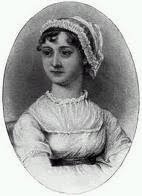
Reading is to the mind what exercise is to the body Joseph Addison, English Essayist, Poet, Dramatist and Statesman. 1672 - 1719


'Clarice's Book Page' is the 'reading room' of the 'Elizannie' page at: http://www.rephidimstreet.blogspot.com/

Wednesday, 23 March 2011

Bread and Roses


18.12.2011 Just found another link for Joan Baez and Mimi Farina singing the inspirational song:


Original Blog:


Whilst 'blog surfing' in my Elizannie hat, I came across a quote from Bread and Roses on Jon Rogers excellent political blog: http://jonrogers1963.blogspot.com/

This is the quote, [on a MayDay card which I have reproduced on the right]:

Our lives shall not be sweated from birth until life closes;
Hearts starve as well as bodies;
Give us bread, but give us roses.


This was so redolent of so many memories and ideas to me that I thought it might be interesting to explore it further on this page!

The poem Bread and Roses was originally written by James Oppenheim (1882-1932), an American poet and writer. He was the founder and editor of The Seven Arts, an early 20thC literary magazine. He wrote about labour struggles troubles [including suffragist themes] in his 1911 fiction book The Nine-Tenths (1911) and in the poem Bread and Roses was also written in 1911 but I suppose came to prominience as a motif for the 1912 textile workers' strike in Lawrence, Massachusetts and as such is associated with the womens' movement because those involved with the strike were mainly women.

The 1912 Lawrence Textile Strike was Union led [by the Industrial Workers of the World] and the immigrant workers were mostly women. One employer lowered wages when the working week was shortened by law,and the industrial action eventually spread to twenty thousand workers at nearly every mill within a week. The strike, despite preidctions of other American trade unions that the workforce of a true downtrodden minority - that of ethnically diverse and mostly women workers - could not be organized, was successful. Sadly over time the union collapsed and workers rights once more were eroded.

The 'Bread and Roses' in the refrain stand for the way that workers lives are made up of more than just the struggle for work and the struggle for beauty has to take place too - other wise work has no inner meaning. To progress is not just for material gain but for emotional and spiritual beauty in our lives!

The term 'Bread and Roses' has since been associated with political strife and was the title of the 2000 Ken Loach film about the right to form a union of Mexican labourers in Los Angeles.

Here is the poem:

As we come marching, marching in the beauty of the day,
A million darkened kitchens, a thousand mill lofts gray,
Are touched with all the radiance that a sudden sun discloses,
For the people hear us singing: "Bread and roses! Bread and roses!"
As we come marching, marching, we battle too for men,
For they are women's children, and we mother them again.
Our lives shall not be sweated from birth until life closes;
Hearts starve as well as bodies; give us bread, but give us roses!
As we come marching, marching, unnumbered women dead
Go crying through our singing their ancient cry for bread.
Small art and love and beauty their drudging spirits knew.
Yes, it is bread we fight for -- but we fight for roses, too!
As we come marching, marching, we bring the greater days.
The rising of the women means the rising of the race.
No more the drudge and idler -- ten that toil where one reposes,
But a sharing of life's glories: Bread and roses! Bread and roses!


For me, there is another memory link. In 1976 Mimi Farina, sister to Joan Baez, set the song to music. I have never been able to find a recording of this but here is a YouTube link


Here is Mimi's adaptation:

As we go marching, marching, in the beauty of the day,
A million darkened kitchens, a thousand mill lofts gray,
Are touched with all the radiance that a sudden sun discloses,
For the people hear us singing: Bread and Roses! Bread and Roses!
As we go marching, marching, we battle too for men,
For they are women's children, and we mother them again.
Our lives shall not be sweated from birth until life closes;
Hearts starve as well as bodies; give us bread, but give us roses.
As we go marching, marching, unnumbered women dead
Go crying through our singing their ancient call for bread.
Small art and love and beauty their drudging spirits knew.
Yes, it is bread we fight for, but we fight for roses too.
As we go marching, marching, we bring the greater days,
The rising of the women means the rising of the race.
No more the drudge and idler, ten that toil where one reposes,
But a sharing of life's glories: Bread and roses, bread and roses.
Our lives shall not be sweated from birth until life closes;
Hearts starve as well as bodies; bread and roses, bread and roses.


Read, listen and reflect. And always question!

Links for this blog:
http://en.wikipedia.org/wiki/James_Oppenheim

http://en.wikipedia.org/wiki/Bread_and_Roses
http://www.marxists.org/history/usa/unions/lawrence-strike/index.htm

Friday, 11 February 2011

Bellowhead


Yes I know that this is allegedly a literary blog. But whilst reading I often listen to music! And all art forms encroach on other art forms, don't they? Well two good excuses for talking about a favourite band - Bellowhead.

Actually this is also a topical post because the band was at the Radio 2 Folk Awards last Monday evening, having been nominated for 'Best Group' - they won! - [I may be alone in preferring to say 'Band' rather than 'Group'], 'Best Tradtional Track' for 'New York Girls', 'Best Live Act'- another win - and 'Best Album' for 'Hedonism'.

I have been a 'folkie' all my life and am actually quite a good singer [as long as there is no one within earshot] To make up for having no sense of rhythm, hearing for tone or pitch I instead play music very loudly thus when singing along being unable to even hear myself accompanying it.

Of course it depends on one's mood what goes into the cd player but on a grey, damp day outside like today Bellowhead's Hedonism playing of exuberant workings of traditional folk tunes make me hop, skip and jump around my housework [metaphorically perhaps!] Two tunes in particular stand out for me: New York Girls, a 'traditional' song arranged by Bellowhead's two founders and Amsterdam, the lovely Jaques Brel song [also performed gorgeously by Rod McEwan - anyone else remember him?], the Mort Shuman translation arranged by another Band member.

So if the damp weather is getting you down, sample a few tracks from this lovely, rocking folk album and enjoy!


BTW it was also sad to hear at the Folk Awards ceremony that Norma Waterson is seriously ill, and that her lovely voice is - temporarily I hope - quiet. Get well soon Norma and be able to sing some more lovely songs soon, please.

Bellowhead website: http://bellowhead.co.uk/site.html

If you would like to read about all of the Radio 2 Folk Awards with snippets of the performers [not necessarily from the evening however] go to: http://www.folkradio.co.uk/2011/02/bbc-radio-2-folk-award-winners-2011/

Thursday, 3 February 2011

Robert Tressell and 'The Ragged Trousered Philanthropists'


Most of this blog first appeared on Elizannie: www.rephidimstreet.blogspot.com earlier today

Today is the centenary of the death of Robert Tressell. 31 MPs have put down an Early Day Motion:


That this House notes the centenary of the death of Robert Noonan (Tressell) on 3 February 2011 interred in a pauper's grave in Walton, Liverpool; recognises the significance of his seminal work, The Ragged Trousered Philanthropists within the wider Labour movement; and applauds both the work of the Robert Tressell Society and the commemorative programme of events organised by Liverpool City Council to appropriately recognise his historical and literary importance,
To see who signed this edm go to http://www.edms.org.uk/edms/2010-2011/1303.htm

Who was Robert Tressel?


Many of those on the Socialist spectrum of the political scene will revere Tressell. Many others - including Socialists - will never have heard of him. I could just point you to the Tressell website go to: http://www.1066.net/tressell/ [with lovely music!]

I have 'lived with him' since I was a child. He was a kind of bard 'oft quoted' in the Socialist household in which I was raised. As soon as I was old enough I read the book The Ragged Trousered Philanthropists and cried a lot and thanked goodness and the Socialist movement that such times as described would never return. I made pilgrimages later in life to Hastings ['Mugsborough' of the novel] to see his fabulous art work - firstly in the basement of the Town Museum and then later in the [proper] displays dedicated to him when at last Hastings honoured and realised what a great man it had not looked after all those years before and had tried to forget for many years after.

The Ragged Trousered Philanthropists is the story of workers in the house decorating business in Edwardian England, before the Welfare State and even the most basic Old Age Pension existed. It is based on the conditions that Tressell himself endured when working in the 'trade' - he is the 'Frank' of the novel. It shows how the workers are oppressed and exploitated by their employers, the State and the Capitalist System. It also shows the awful way in which they are expected to conduct their lives in the 'genteel' town of Mugsborough [Hastings]

As this coalition government seems intent on punishing the poor for being poor, this book should be read again, or listened to on audio tape, as an awful warning from History. What it was like to live before the Welfare State. Before even a most basic Old Age Pension. The comedian Johnny Vegas was responsible for an excellent production of this a couple of years ago on the BBC and the audio tape can be bought. I wrote a 'summer reading' blog on this last May and make no apology for republishing it here.

The book is recommended by people as diverse [and lovely!] as Ricky Tomlinson and the MP Stephen Twigg. It was been chosen as his book for a Desert Island on 'Desert Island Discs' by Johnny Vegas.

It is *not* a great work of literature but it is never the less a seminal work. Books that affect lives are always important to remember. So I decided to cross-post it here from the Elizannie page at www.rephidimstreet.blogspot.com


I wrote a blog about this last May on the Elizannie site:
25th May 2010 http://rephidimstreet.blogspot.com/2010/05/ragged-trousered-philanthropists.html
Have decided to become dictatorial and recommend summer reading on facebook, twitter, various blogs by other people and here on my own: The Ragged Trousered Philanthropists by Robert Tressell http://amzn.to/dBjzQD Many 'Old Labour' party members claim it changed their lives/caused them to become Socialists. I worry that the Condem government policies may see a return to many of the problems highlighted in this novel, albeit in a more 'modern' form {OK so we may not have workhouses anymore but some form of state interference may cause pensioners to lose all that they have saved before any State help becomes available}


Picture courtesy of amazon.co.uk [Kindle edition - yes I have one of my kindle! And two in the cupboard!]

Tuesday, 18 January 2011

Happy the Man - John Dryden


Happy The Man
In memory of Bill Wells

Happy the man, and happy he alone,
He who can call today his own:
He who, secure within, can say,
Tomorrow do thy worst, for I have lived today.
Be fair or foul or rain or shine
The joys I have possessed, in spite of fate, are mine.
Not Heaven itself upon the past has power,
But what has been, has been, and I have had my hour.


John Dryden
1631-1700


In loving memory of Bill, 1946 - 2011. Sleep gently friend.
Chosen by Bill's son Kirk to be read at his funeral

Saturday, 15 January 2011

The Ragged Trousered Philanthropists


We often talk about 'books which change lives'. This is one which has certainly had a great influence on mine.

I cannot let the opening pages of this blog go without reference to The Ragged Trousered Philanthropists. This is not a great work of English Literature but can truly claim to be a book that has changed many lives. For instance several 'Old Labour' party members claim it changed their lives/caused them to become Socialists. The comedian Ricky Tomlinson claimed it made him into a 'proper' political activist.

It is the story of working people in the 1900s, before any form of welfare state was introduced and how easily the whims of fortune or their employers could reduce them to destitution and the workhouse.

We may be 100 years away from the time setting of this novel but if government policies cause a return to many of the problems highlighted in this novel, albeit in a more 'modern' form {we may not have workhouses anymore but some state proposals may mean pensioners will lose all savings before State help becomes available, student fees are rising, disability living allowance is being cut etc etc} Tressell will be spinning in his grave.

Tressell himself died in poverty in Liverpool just before he could board a boat to America, looking for a new life and work. His book was not published until a few years after his death. Tressell was originally buried in an marked pauper's grave along with 12 others. A headstone was erected on this grave honouring not only Tressell but also those with him in 1977 by subscription of Socialists and Trade Unionists.


First 'published' in a slightly different form in the Elizannie blog, Thursday, 27th May 2010

Room by Emma Donoghue


Its a big decision, what to discuss in my first 'literary' blog. I thought a short piece on a poem would be a good way to ease myself and any prospective readers into the idea of a new blog and started a piece on Blake's 'Jerusalem'. The short piece turned into a rather baggy monster due to my passion for both Blake and the poem and still needs a lot of work although I am promising myself to cut it back to a presentable length soon.

Anyway, having made this decision I sat down, finished the latest who dunnit I was reading [Ian Rankin's The Compaints, rather good actually but I still miss Rebus] and thought it about time I made inroads into the 2010 Booker Short List which to my shame I haven't yet started despite having received all six for Christmas.

On a sort of 'eeny,meeny, miny, mo' basis - because they are all great books written either by authors I have read and enjoyed previously or if not are books which have received very interesting reviews - I chose Emma Donoghue's Room. I don't usually read the blurb on the back of a book jacket in case it gives away too much of the story but accidentally managed to read a comment on the front [!] this time:
Room is a book to read in one sitting. When it's over you look up: the world looks the same but you are somehow different and that feeling lingers for days
This is by Audrey Niffenegger, author of The Time Traveler's Wife, a book that also makes one look at the world in a different way.

The first thing I would say is that, having in the past taught adults English Literature for the Workers' Educational Association [WEA] I know that there are lots of people who do not like novels written in the first person - I do like novels written in the first person narrative for the immediacy they give and Room is such a novel. This is the only way the story could possibly have been told.

A young child [Jack] is the narrator so the reader has to view the world through Jack's eyes and perceptions. There is a literary device called defamiliarisation* where something familiar is described in unfamiliar terms and the reader needs to 'work' to 'find' the familiar object. So in Room the reader has to look at and understand Jack's world through his descriptions. But it doesn't just stop there as Jack's language and vocabulary is may appear slightly odd at first.

If this all sounds off putting it is not meant to be. As Nifenegger implies, this book is difficult to put down. As the reader's understanding of Jack's world becomes clearer his world changes and again the reader has to understand both Jack's world and the world and customs of Everyman.

This book really is a book that one races to finish - but once finished it intrudes into 'everyday' life and there is a sense also of a sadness that Jack and Ma are left behind.

The picture above shows the paperback edition.


*A good example of defamiliarisation is shown below in Craig Raine's poem A Martian Sends A Postcard Home. This poem was a forerunner of the
1970/80s 'Martian Poetry' movement.

A Martian Sends A Postcard Home

Caxtons are mechanical birds with many wings
and some are treasured for their markings -- [books]

they cause the eyes to melt [cry]
or the body to shriek without pain. [laugh]

I have never seen one fly, but
sometimes they perch on the hand.

Mist is when the sky is tired of flight
and rests its soft machine on ground:

then the world is dim and bookish
like engravings under tissue paper.

Rain is when the earth is television.
It has the property of making colours darker.

Model T is a room with the lock inside -- [car]
a key is turned to free the world

for movement, so quick there is a film [view from the windscreen]
to watch for anything missed.

But time is tied to the wrist [watch]
or kept in a box, ticking with impatience. [clock]

In homes, a haunted apparatus sleeps, [baby]
that snores when you pick it up.

If the ghost cries, they carry it
to their lips and soothe it to sleep

with sounds. And yet they wake it up
deliberately, by tickling with a finger.

Only the young are allowed to suffer [bowel movements/
openly. Adults go to a punishment room lavatory]

with water but nothing to eat.
They lock the door and suffer the noises

alone. No one is exempt
and everyone's pain has a different smell.

At night when all the colours die,
they hide in pairs

and read about themselves -- dreams]
in colour, with their eyelids shut.

Craig Raine

Wednesday, 5 January 2011

Jane Austen and my new year intentions....


Well, I should have guessed this would happen! As soon as I announced my intention of starting a literary blog lots of things rushed in to take up my time, especially in my 'alter ego' of Elizannie and I have been posting, replying, communicating about events at www.rephidimstreet.blogpot.com !

However I have been following up on another New Year intention and reading along with a dear friend at http://misssylviadrake.livejournal.com/ who is re-reading Jane Austen's letters. This is where my kindle comes in handy as I do not have time to go book shopping so have 'bought' a kindle version of the book and am now enjoying reading along with the blog!